
ESG and compliance teams are being asked to report numbers operations have tracked in pieces for years: tons diverted from disposal, recovered material sold, recycled content in a product, hazardous material handled, and the destination of a load after it leaves the yard.
Sustainability may prepare the report, finance may review it, and a customer, regulator, lender, or board may request it. Supporting evidence usually starts elsewhere: an inbound scale ticket, a material grade, a lot record, a production move, a shipment, or a settlement.
That is why material traceability software matters. It gives the business a way to connect a sustainability claim to the operational events that support it. A report should not depend on a spreadsheet assembled from memory at quarter-end. It should be possible to follow the material from intake through processing and sale, with the quantity, classification, ownership, and documentation still attached.
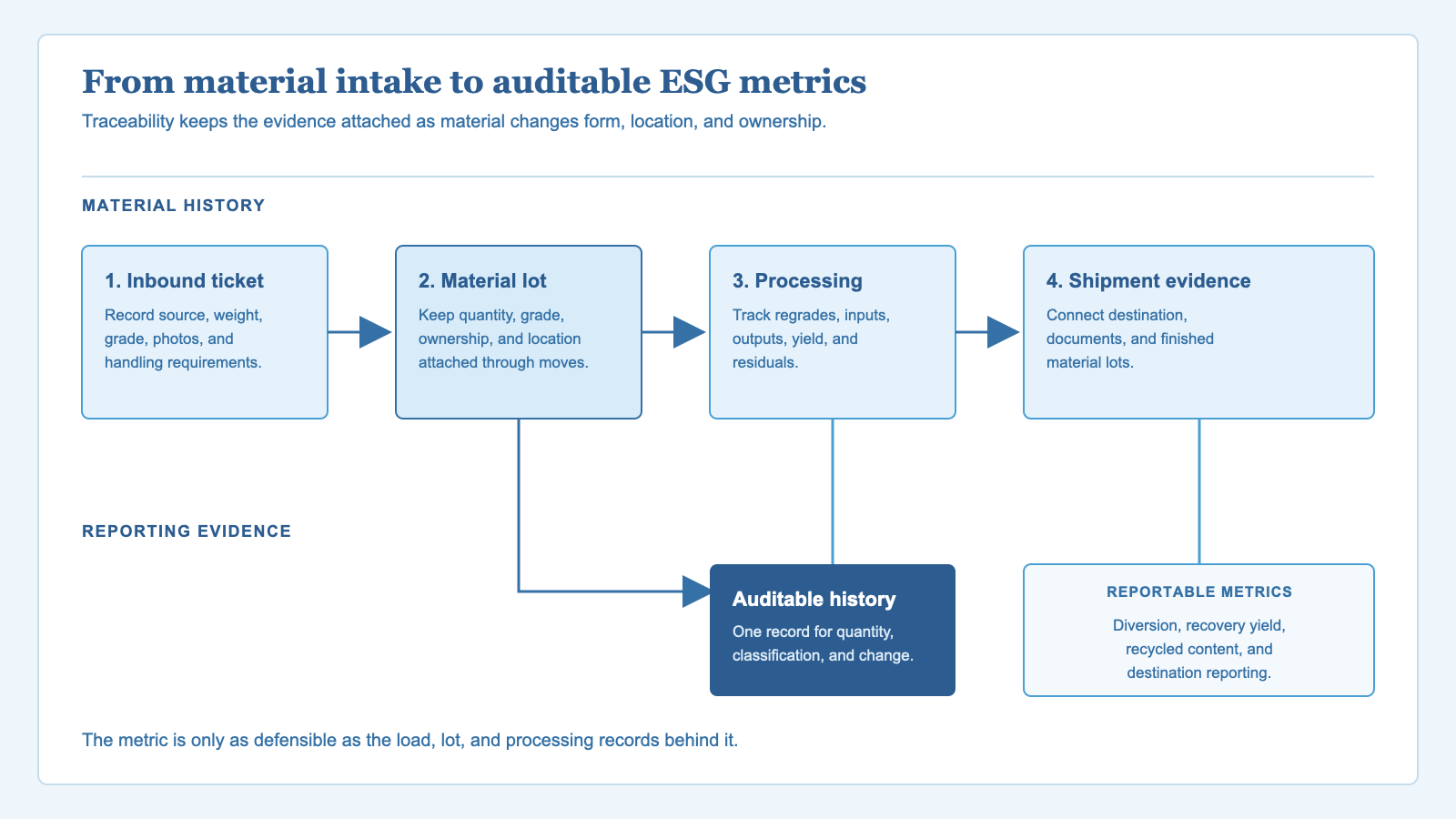
Traceability is more than knowing which customer bought a shipment. For ESG and compliance purposes, the system must preserve the identity and history of material as it changes hands or form.
A useful traceability record can answer:
The answers must stay connected even when the original load is split across multiple movements or combined with other material. That is the difference between a chain of custody and disconnected transactions.
The first weak point in a sustainability report is often the first physical handoff. A supplier invoice may show that material was purchased, but it does not necessarily show what arrived, how it was classified, or what happened to it afterward.
An inbound ticket creates a stronger starting point. It can record the supplier, vehicle, location, gross and tare weights, net quantity, material type, initial grade, quality observations, and supporting photos or documents. If the load contains regulated or hazardous material, the record can also preserve the relevant handling information and destination requirements.
That initial record should not become a dead-end PDF. It needs to remain available as the material moves through the business. If a load is regraded after inspection or sent through a shredder, baler, furnace, or sorting line, the system should retain the original classification, connect inputs to outputs, and show the recovery result.
This gives compliance teams evidence they can inspect rather than a summary that depends on the person who prepared it.
Reports often use aggregate figures, but the underlying activity happens at the lot level. A lot represents material with a shared identity, intake date, grade, and cost or ownership basis. It may later be moved, regraded, blended, processed, or shipped.
With material lot tracking, a business can preserve that history as the material changes. The lot record can connect an inbound ticket to a storage location, a regrade, a production run, and an outbound shipment. When a quantity is split, the system can show how it allocated the original material. When several inputs become one finished product, the production history can show which lots contributed to the result.
This matters for recycled-content claims. A customer asking for the percentage of recycled material in a shipment may need to know which recovered inputs were used, how much was processed, what yield was achieved, and which finished lots were sold. Lot-level history makes that calculation explainable. It also helps distinguish material received, recovered, sold, disposed, and still in process when calculating diversion.
Extended producer responsibility programs and CSRD-style disclosures vary by jurisdiction, industry, and reporting period. The specific required fields will depend on the company and the applicable framework. The operational expectation is consistent: reported sustainability information needs a clear method, defined boundaries, and reviewable evidence.
That creates several practical requirements for the software behind the report.
Consistent definitions. The business should define what counts as recovered, recycled, reused, disposed, exported, or hazardous. A metric should not change because one location uses a different material category or spreadsheet formula than another.
A visible reporting boundary. Teams need to know whether a figure covers one yard, one legal entity, all operating locations, or material handled on behalf of a customer. Multi-site and multi-entity businesses need reporting that preserves those boundaries, not one unexplained total.
A record of changes. If a weight, grade, destination, or processing result changes, the audit history should show the change and its source. Corrections are normal in physical operations. Unexplained corrections are what create reporting risk.
Supporting documents. Tickets, bills of lading, inspection results, certificates, photos, and disposal records may all support a claim. Attach those documents to the relevant load, lot, or shipment rather than storing them in an unrelated folder.
Reconciliation to finance. Reported quantities should agree with inventory movements, purchases, sales, settlements, and production records. Finance teams should not have to build a second version of the material story to validate the first one.
For a practical overview of how these records support sustainability reporting, start with the workflow that creates the data. Reporting is more reliable when it comes from normal operating activity instead of being rebuilt afterward.
ESG teams and CFOs ask different questions about the same material movement.
An ESG leader may ask how much material was diverted from disposal and whether the result can be supported for an assurance review. A CFO may ask whether the same quantity matches inventory, revenue, cost of goods sold, and the settlement paid to the supplier. Both questions depend on the material's identity and movement.
When operations and finance use separate systems, the answers can drift. A scale ticket may show one weight, a spreadsheet another, and the general ledger a third after a regrade or adjustment. Teams then spend reporting season explaining differences instead of analyzing performance.
A connected ERP keeps the operational event and financial transaction together. The inbound receipt records what entered inventory. A regrade preserves the material history while changing its classification. Production records the input and output quantities. An outbound fulfillment and invoice show what left the business. That same transaction history can support financial reporting and sustainability metrics without creating a parallel data set.
For electronics recyclers, the chain can include devices received, tested, dismantled, sorted into material streams, and sent to downstream processors. E-scrap ERP traceability needs to preserve those relationships because the environmental claim often depends on what happened after dismantling, not only on what entered the facility.
During an evaluation, ask the vendor to demonstrate a real material history rather than show a list of reporting features. Start with one inbound load and follow it through the full workflow.
Ask to see:
Also ask how the system handles material the operator does not own. Track tolling and customer-owned inventory for custody and processing, but don't treat it as purchased inventory or include it in owned-material metrics by mistake.
The strongest system makes evidence part of the workflow. Operators capture information when the load arrives, inspectors update the material, production records the conversion, and finance sees the corresponding transaction. ESG and compliance teams can use the same history to support their reports.
Software cannot define a company’s reporting boundary or decide what a business means by recovered material. Those decisions still require policy, ownership, and review. But the right system can make the policy executable and the evidence accessible.
Material traceability software should connect the scale ticket, lot, production event, shipment, supporting document, and financial record. That gives ESG teams a defensible basis for diversion and recycled-content metrics, while giving CFOs confidence that the reported quantities tie back to the business’s actual transactions.
Loop ERP is built natively inside Oracle NetSuite for materials-based businesses. It connects ticketing, lot tracking, processing, inventory, settlements, shipments, and financials in one system, so the chain of custody remains attached to the material as it moves through the business.
If you assemble your sustainability metrics from exports and spreadsheets, the first improvement may be tracing one metric back to one load. Talk with Loop ERP to see how operational and financial records can support the same reporting process.
What is material traceability software?
Material traceability software records where material came from, how it was classified and processed, and where it went. It connects operational records such as tickets, lots, production moves, shipments, and documents so the material history can be reviewed later.
How does lot tracking support ESG reporting?
Lot tracking gives reported quantities a physical basis. It connects intake, storage, regrading, processing, and outbound activity, which helps teams calculate and explain diversion, recovery, yield, and recycled-content metrics.
Can traceability software support EPR or CSRD-style disclosures?
It can provide the operational evidence and audit history needed to support disclosures, including quantities, destinations, processing results, ownership, and supporting documents. The company still needs to define the applicable reporting framework, boundaries, and calculation methods.
Why should material traceability connect to the ERP?
Connecting traceability to the ERP keeps material quantities aligned with inventory, settlements, sales, and financial reporting. It reduces the need to reconcile a sustainability spreadsheet against separate operational and accounting records.
Powerful, self-serve product and growth analytics to help you convert, engage.
Blogs
September 16, 2026
Material Traceability Software: What ESG and Compliance Teams Actually Need
September 10, 2026
Scale House Software Explained: Ticketing, Dispatch, and the Financial Handoff
September 3, 2026
What ERP Do Scrap Yards Use? A Buyer's Guide for Q4 Planning Season


