For Scrap Metal & Recycling CFOs

The Financial Case for Loop ERP in Scrap Metal

Scrap metal margins move with the market, not with your close calendar. When commodity prices swing daily and inventory sits on last month's costing, the numbers on your P&L are already out of date by the time you see them.

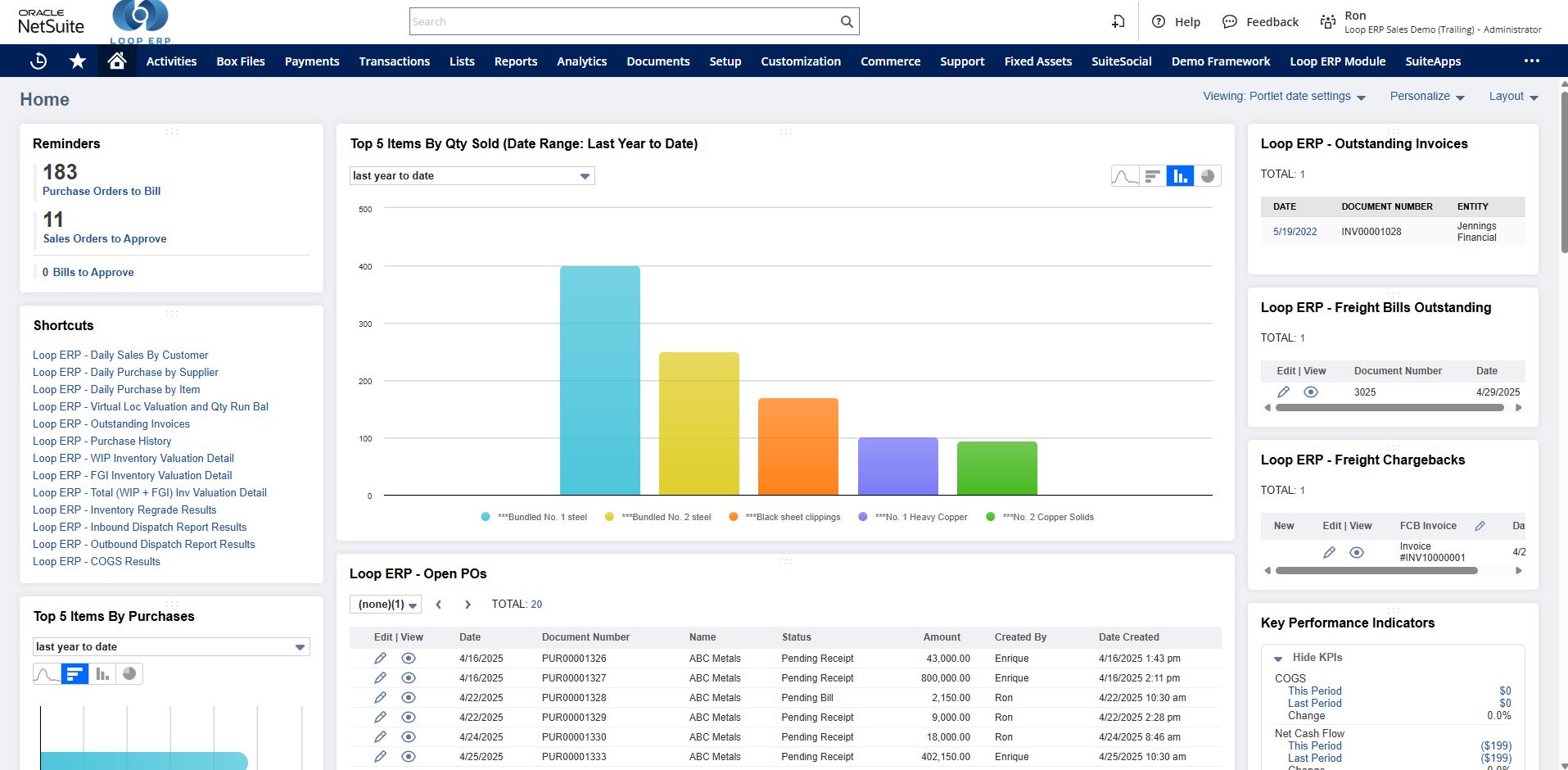
For a CFO running a multi-site scrap or recycling operation, the real cost center is the gap between what happens on the scale and what posts to the ledger. Loop ERP closes that gap. One login, one system, total control, with operations and finance running on the same real-time data inside NetSuite.

Book a Demo
img
icon

60-second check

Is your scale talking to your ledger?

Six quick questions about how a load moves from your scale to your books. Answer straight and get a real score, plus the spots where the gap is costing you time.

6 QUESTIONS ~60 SEC NO EMAIL TO START

The CFO's Problem

Where Scrap Metal ERP Breaks Down for Finance

Most scrap and recycling operations run on some combination of yard or scale software, spreadsheets, and a general ledger that was never built for this industry. Inbound tickets get weighed and graded on the floor. Settlements happen with suppliers over the phone or on paper. None of that reaches the general ledger until someone keys it in, often weeks later. That delay creates real financial risk: inventory valuation depends on regrades and settlements that haven't posted yet, so the balance sheet is a guess until month end, and margin by material, yard, or contract gets reconstructed from spreadsheets instead of read straight from the system. When a lender asks for a borrowing base certificate or current inventory values, finance is pulling numbers that are already stale.

How Finance Teams Cover the Gap Today, and Where It Breaks at Scale

Most finance teams cover this gap with people, not systems. Someone reconciles the scale software against the accounting system every week. Someone else manually enters settlements, regrades, and tolling fees as journal entries. At month end, the team stops to true up inventory, chase missing tickets, and explain variances that came from a data entry lag rather than an actual operating problem. Generic ERPs do not fix this. NetSuite, Sage, and QuickBooks Enterprise all assume a standard purchase order, receipt, and invoice flow. Scrap does not work that way: a load comes in at an estimated price, gets reweighed and requalified, and only settles to a final price once assays or market indices confirm the number. Regrades reclassify material between grades without a real purchase or sale happening. Tolling means processing material you never owned. None of that maps cleanly onto a generic chart of accounts, so finance teams end up building workarounds in spreadsheets or paying for customization that breaks every time the business grows. Loop ERP is built for this transaction chain from the start.

What Changes With Loop ERP

Loop ERP is built natively inside NetSuite. There is no integration layer between operations and finance to keep in sync. Every scale ticket, regrade, settlement, and tolling transaction posts directly to the general ledger in real time. For a CFO, that changes what the numbers mean day to day:

  • Inventory valuation reflects actual settlements and regrades, not last month's estimate. Loads book in at a provisional price at intake and settle automatically to final pricing once assays, weights, or market indices confirm the real value, so the balance sheet does not carry a guess.
  • Regrades reallocate value between inventory items with full traceability back to the original ticket and no net GL impact, so material reclassification does not distort margin reporting.
  • Tolling is handled correctly by transaction type. Inbound tolling keeps a customer's material off your books at zero cost and recognizes only the processing fee as revenue. Outbound tolling reallocates your inventory to the processor and records their fee as an expense, not a purchase.
  • Multi-site and multi-entity operations report from one system. Consolidated margin, inventory, and profitability data are available without a reconciliation spreadsheet.
  • Role-based access, audit trails, and SOC 1 and SOC 2 compliance give finance the controls a lender, auditor, or board expects, built in rather than bolted on.

What This Looks Like in Practice

Sortera Technologies, a scrap metal recycling operation in Fort Wayne, Indiana, ran a disconnected ScrapIT and NetSuite Starter Edition setup where every transaction had to be re-keyed between systems and inventory updates lagged more than 24 hours. On Loop ERP, purchase requisitions, production moves, and settlements happen in real time inside NetSuite, with no reconciliation step.

By moving everything to a single, NetSuite-native platform, we now have a system that matches the sophistication of our process. It eliminated our operational bottlenecks and kept our data in sync in real time, turning a hurdle into a driver for our growth.

Ben Pope, COO, Sortera Technologies

See It Against Your Own Numbers

The fastest way to evaluate Loop ERP as a CFO is to bring your own numbers: a recent settlement, a multi-site consolidation, or a borrowing base certificate. Book a demo and we will walk through how it posts in real time, not on a slide.

Book a Demo

Frequently Asked Questions

How does Loop ERP affect our monthly close?

Because scale tickets, settlements, and regrades post to the general ledger as they happen, most of the reconciliation that drives a slow close is gone before month end starts. Finance is closing on data that already matches operations instead of a spreadsheet built to make it match.

How does Loop ERP handle inventory valuation when material gets regraded?

Regrades reclassify material between grades or items while preserving traceability back to the original ticket, with no net GL impact. Inventory value updates as settlements finalize, not on an estimate carried from intake.

Can Loop ERP support multi-entity, multi-site consolidation?

Yes. Loop ERP runs on NetSuite's multi-entity and multi-location foundation, so consolidated financial and operational reporting across yards, entities, and currencies comes from one system instead of a rollup built by hand.

What controls does Loop ERP give finance for audits and lenders?

Role-based access, field-level permissions, full audit trails, and SOC 1 and SOC 2 compliance are built into the platform. When a lender or auditor asks for current inventory values or a transaction history, the answer comes from the system of record, not a reconstruction.

How does tolling get accounted for correctly?

Inbound tolling keeps a customer's material off your books at zero cost and recognizes only the processing fee as revenue. Outbound tolling reallocates your inventory to the processor and records their fee as an expense, not a purchase. Both post automatically, with no manual journal entries.

Blogs

Latest Insights

See All Blogs
icon

October 20, 2026

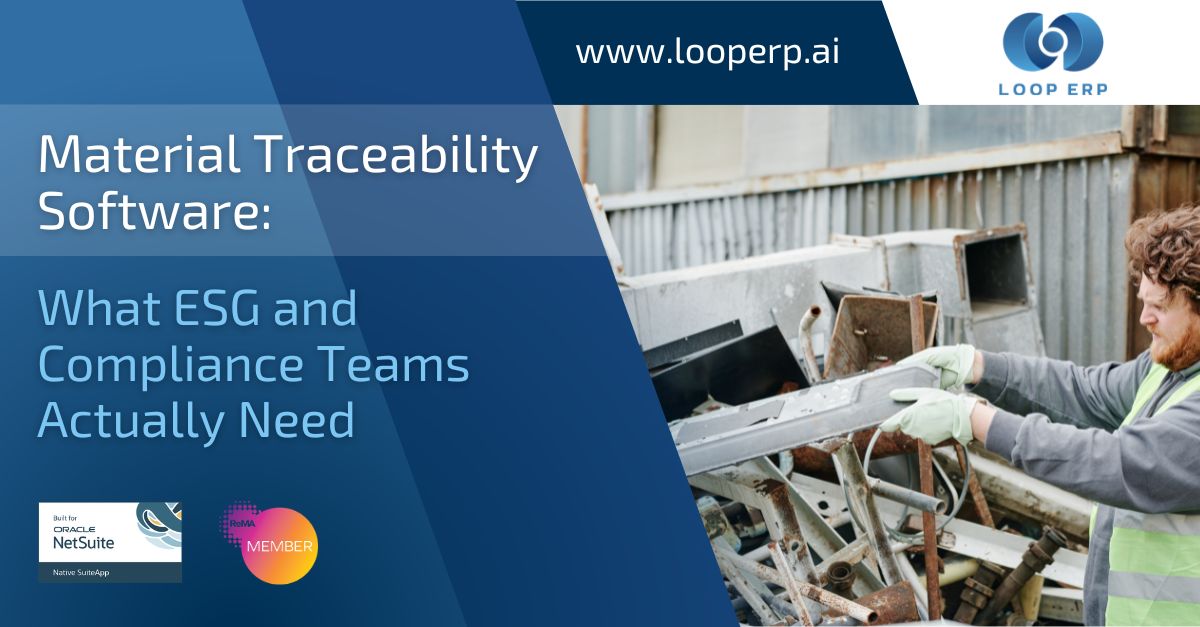
Material Traceability Software: What ESG and Compliance Teams Actually Need

icon

October 20, 2026

Closing the Books on Q3: Why Manual Reconciliation Breaks Down at Quarter-End

icon

September 10, 2026

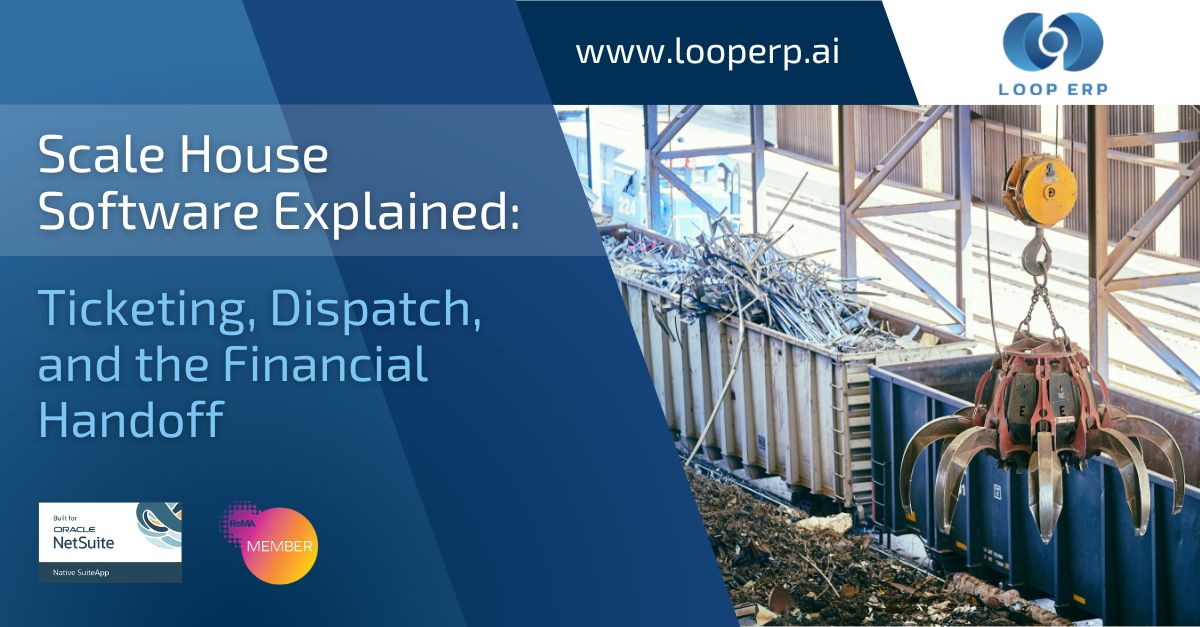
Scale House Software Explained: Ticketing, Dispatch, and the Financial Handoff

See All Blogs